How to Use a Japanese Sento or Super Sento: A Visitor’s Guide
Your first public bath visit can be straightforward. Here’s what to bring, what to do in order, and how to share the bathing space courteously.
Quick answer
At a sento, take off your shoes as directed, pay, undress completely, wash before entering the bath, and keep your towel and hair out of the water. Rinse with hot water before soaking, then dry off before returning to the changing room. In Kyoto, 3–4 bucketfuls is a guide for that rinse.
To use a Japanese public bath, leave your shoes where the facility directs, pay for entry, undress, wash thoroughly, and then enjoy the bath. When you finish, dry yourself before returning to the changing room and getting dressed. This guide explains how to use sento and super sento from arrival to departure, including the small courtesies that help everyone share the space. A sento is a neighborhood public bath; a super sento is a larger facility with several baths and often saunas and rest areas. Arrangements differ, so follow posted instructions and check the official site before you go.
What is a sento, and what is a super sento?
A sento is a neighborhood public bath. Its admission price is set by the prefecture: adult admission is ¥600 in Osaka and ¥550 in Kyoto. These are the prefectural prices for general public baths, rather than prices for every place with a bath.
A super sento is a larger facility with several baths, saunas, and rest areas. Each facility sets its own price. Facilities also differ in what they provide and how entry works, so check the official site for the admission price, hours, amenities, and payment methods before setting out. Prices and hours were checked on each facility’s official site on October 12, 2026; check again before your visit.
The bathing routine is similar in both places: you prepare in a changing room, wash your body, and enter the shared bath clean. Signs and staff directions take priority when a particular facility does things differently.
What should you check before you go?
What should you bring?
A towel is useful for washing and drying, but check the official site to see what the facility supplies. The same applies to soap and shampoo. Pack what you need if the site does not make the amenities clear. Our guide to what to bring to a sento or onsen can help you prepare.
Check how you can pay, too. Ticket machines and front desks are both possible, and payment options vary by facility. If you are unsure when you arrive, pause at the entrance and follow the signs or ask staff before entering the changing area.
What if you have a tattoo?
Tattoo policies vary by facility; check the official site before visiting. Some bathing facilities restrict tattoos, and a private bath, called a kashikiri-buro, may be an option where one is offered. Do not assume that a policy at one sento applies to another. See our guide to tattoos at Japanese baths in Osaka and Kyoto for more planning context.
When should you go?
Check the facility’s official site for its current hours and any entry instructions. Give yourself time to read the signs, change, wash, bathe, and get dressed without rushing. If a detail you need is not stated, ask the facility directly before you go.
What do you do from the entrance to the exit?
How do you enter and get ready?
At the entrance, look for instructions about your shoes. Put them where directed, then buy a ticket or pay at the front desk according to the facility’s system. Keep any ticket or locker item you are given until you know how the facility uses it.
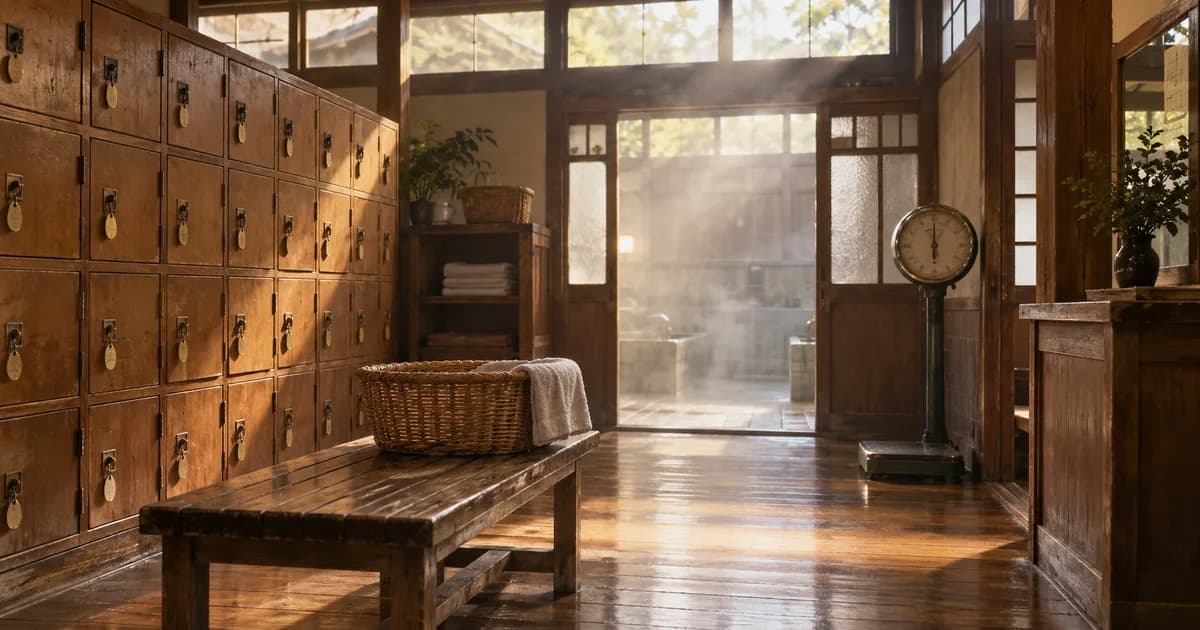
Go to the changing room indicated for your bath. Undress completely, including underwear, and store your clothes and belongings as directed. The Kyoto bath association asks bathers to use one locker per person, so leave other lockers available. Take what you need for washing into the bathing area.
What happens before you get into the water?
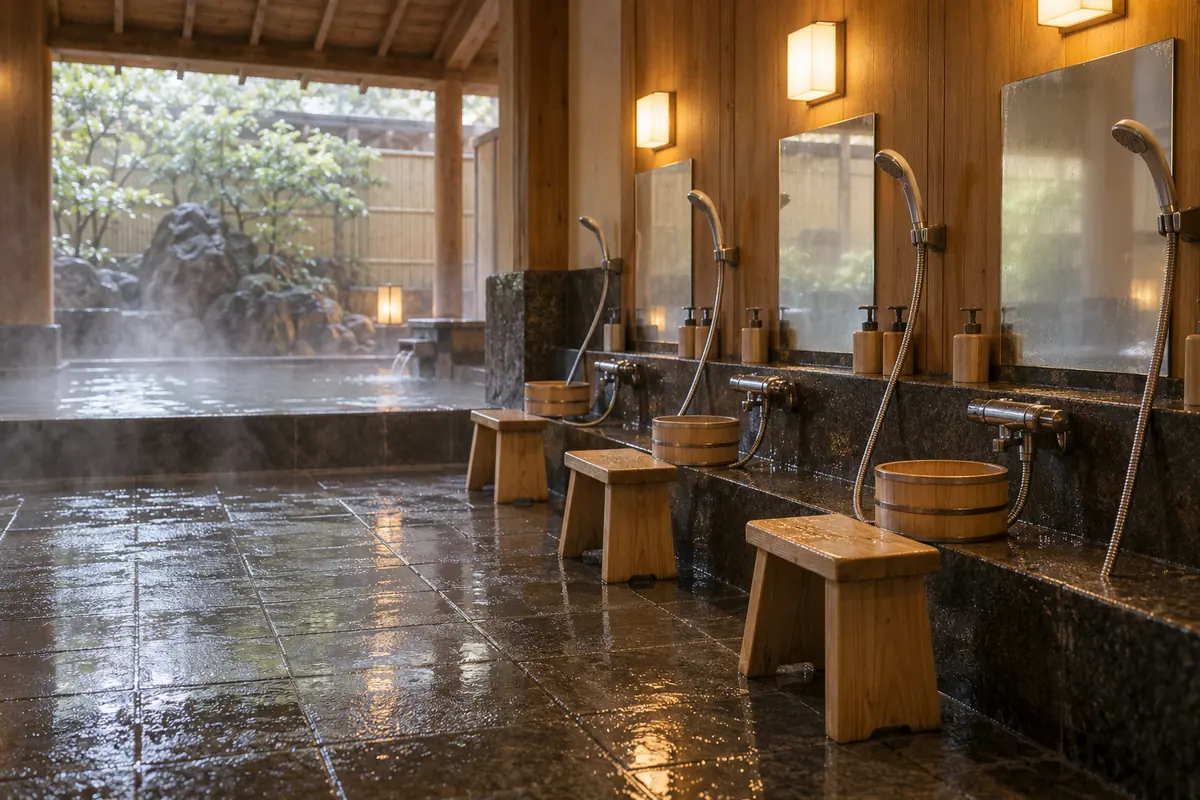
Wash your body at the washing area before entering a shared bath. If you use a shower, sit while using it and aim the water so it does not spray other people. Keep your belongings within your own washing space; the Kyoto bath association asks each person to use one washing spot. Rinse away soap before you move toward the tub.
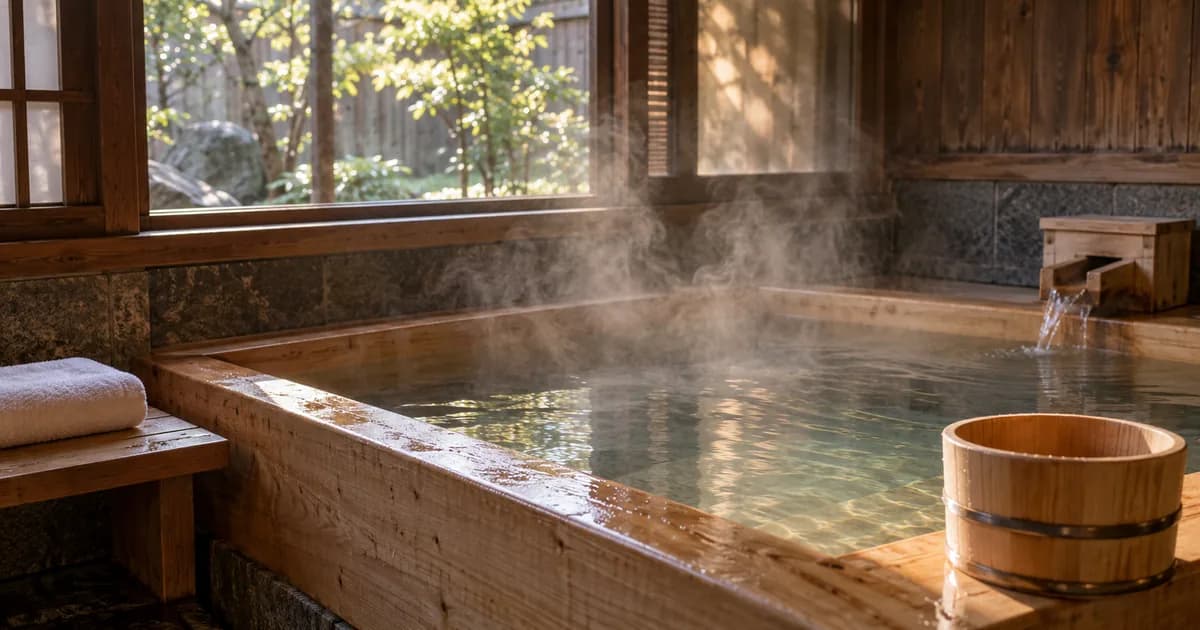
Next, do kakeyu: pour hot water over yourself with a bucket before getting in. The Kyoto public bath association’s guide suggests 3–4 bucketfuls. Take your time as you approach the water, especially if it feels hot to you.
What do you do in the bath and afterward?
Step into the bath without jumping or splashing. Keep your towel out of the water. If your hair is long, tie it up so it stays out of the bath as well. Leave room for others and follow any instructions posted beside individual tubs.
When you are ready to leave the bathing area, dry your body before going back into the changing room. Then get dressed, collect your belongings, and follow the facility’s instructions for returning a key or leaving. You can take a drink of water before and after bathing, as the Tokyo bath association advises.
Which rules help everyone share the bath?
The central rule is to keep the shared water clean. Remove all clothing, wash before entering, and do not put a towel in the tub. Tie up long hair. The Osaka public bath association also asks bathers not to wash clothes in the bathing area or the bath, and to wipe their bodies before returning to the changing room.
Use showers with care so water does not reach the person beside you. Do not dive, swim, or put your head underwater. Keep to one locker and one washing spot per person. These are shared spaces, so a little attention to where your water and belongings go makes the routine easier for everyone.
Do not take photos in a bathing area. Keep your phone and camera put away there, even if the room appears empty; JNTO’s bathing guide includes a no-photos rule. If you are uncertain about anything else, look for a posted instruction or ask staff.
How long should you soak?
Use how you feel and the water temperature to guide you, and avoid staying in hot water for a long time. Japan’s Consumer Affairs Agency advises water at 41°C or lower and up to 10 minutes in the bath. You do not need to complete a set amount of time to have a proper sento visit.
If the water feels too hot, step out and take a break rather than pushing through. The agency also advises avoiding a bath immediately after a meal, after drinking alcohol, or after taking medicine. Follow any safety instructions at the facility.
Where can you try a public bath in Kansai?
For a larger facility with multiple baths and other spaces, start with our guide to super sento in Osaka. Check the official site of any place that interests you for its current price, hours, amenities, and tattoo policy before traveling there.
If you would like a neighborhood public bath, browse public bathhouses in Kyoto. The same routine applies wherever you choose: follow the entrance instructions, wash first, keep the bath water clear, and dry off before returning to the changing room.
Summary
A sento visit follows a simple order: enter, change, wash, rinse, soak, and dry off before getting dressed. Follow the signs at your chosen facility and check its official site for details that vary. For a refresher before you go, read our onsen and sento etiquette guide.
FAQ
Do you have to be naked in a sento?
Yes. Remove all clothing, including underwear, before entering the bathing area. Keep your clothes in the changing room as directed. If you are unsure where to leave an item, check the facility’s instructions or ask staff before going in.
Can I bring my own towel?
Yes, you can bring a towel, but keep it out of the bath water. Check the facility’s official site to see whether towels are supplied or available there. A towel can help you wash and dry off; remember to wipe your body before returning to the changing room.
How much does a sento cost in Osaka?
Adult admission to a general public bath in Osaka is ¥600. A super sento sets its own price, so its admission may differ. Check the official site of the facility you plan to visit for its current price, payment methods, and any details about what admission includes.
Do I need to shower before the bath?
You need to wash your body before entering the shared bath. At a shower, sit and aim the water away from other people, then rinse away soap. Do kakeyu, a bucket rinse with hot water, before you step into the tub.
Can I take photos?
Do not take photos in the bathing area. Keep your phone or camera put away there, even if you do not see other bathers. For any other part of a facility, follow its posted rules or ask staff before taking a photo.
What if I have a tattoo?
Check the facility’s official site for its tattoo policy before visiting. Policies vary, so another bathhouse’s rules will not tell you what this one allows. If a facility restricts tattoos, you can check whether it offers a private bath and what its booking rules are.
Sources
- 銭湯マナー (大阪府公衆浴場業生活衛生同業組合)
- 銭湯の利用方法 (京都府公衆浴場業生活衛生同業組合)
- 銭湯の入り方 (東京都浴場組合)
- How to best enjoy onsen (Japan National Tourism Organization)
- 冬季に多発する高齢者の入浴中の事故に御注意ください! (消費者庁)
- 公衆浴場入浴料金の改定について (大阪府, March 1, 2025)
- 公衆浴場入浴料金の統制額の改定について (京都府, March 1, 2025)
More guides
Guide · 8 min read
Onsen and Sento Etiquette: 12 Rules for First-Timers
A shared bath is easier to enjoy when you know what to do before you step into the water. These rules explain both the habit and the reason behind it.
Guide · 9 min read
Tattoos at Japanese Baths: Osaka and Kyoto Rules
Some Kansai bathhouses welcome guests with tattoos, while others set conditions or refuse entry. Use their published policies to plan your visit.
Guide · 8 min read
Super Sento in Osaka: Baths, Prices, and How to Visit
Choose an Osaka bathhouse that fits your route and schedule. Compare admission prices, late closing times, and facilities before you go.