What to Bring to a Sento or Onsen: A Simple Packing List
Two towels are a useful starting point, but you may be able to rent them or find them included. Here’s what to pack and what to check before you go.
Quick answer
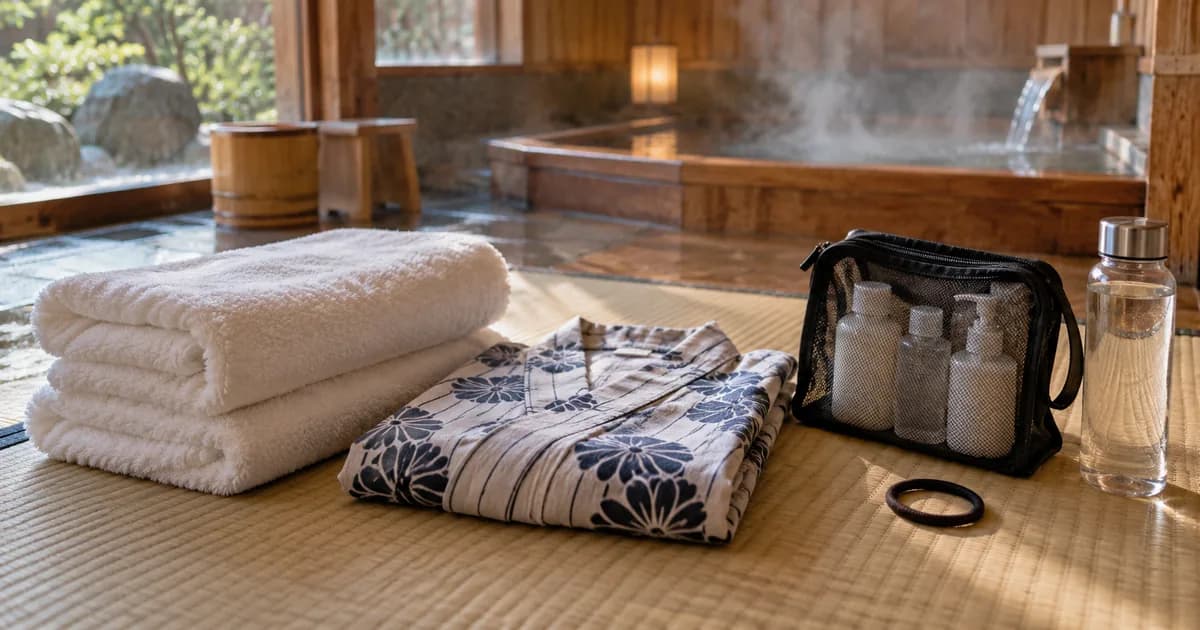
Pack one small towel and one towel for drying off, plus soap, shampoo, clean clothes, payment, a bag for damp items, and water. Bring a hair tie if your hair is long. Towels and toiletries vary by facility; check the official site before counting on rentals or included amenities.
If you’re wondering what to bring to onsen in Kansai, start with two towels, soap and shampoo, a change of clothes, a hair tie if needed, payment, a plastic bag, and water. Check the facility’s official site before you leave: towels and toiletries may be included, available for a fee, or something you need to bring yourself. This list works for a neighborhood sento (public bath), a super sento (a larger bath facility), or an onsen (a bath using hot spring water). You can pack lightly once you know what your chosen facility provides.
What belongs on the short list?
Use this as your starting point for a day trip. You can leave an item at home when your chosen facility confirms that it provides one.
- Two towels: A small towel is useful around the washing area, while a larger one is for drying off afterward. Keep towels out of the bathwater.
- Soap and shampoo: Pack travel sizes unless the facility confirms that toiletries are provided or sold.
- A change of clothes: Bring clean clothes or underwear for after your bath.
- A hair tie: Tie up long hair so it stays out of the bathwater.
- Payment: Check the official site for the current admission price and any charges for towels or other items.
- A plastic bag: Use it to carry damp towels or toiletries home.
- Water: Keep it with your belongings for before or after your visit.
You bathe without clothing at a Japanese public bath or onsen. Before entering the water, wash your body and use kakeyu (rinsing with hot water before you get in). If this is your first visit, the guide to using a Japanese public bath walks through the visit from arrival to departure.
Why pack two towels?
The small towel and drying towel have different jobs. A small towel is easy to carry to the washing area, but it must stay out of the bathwater. Dry your body before returning to the changing room. These points are part of the Osaka bathhouse association’s bathing guidance.
You do not have to own a special bath towel. Choose towels you can carry comfortably and keep the dry one with your belongings until you need it. If you plan to rent or buy towels, check what the facility offers before leaving yours behind.
What do sento and super sento provide?
A neighborhood sento may not supply soap or shampoo. A super sento often has more amenities or rentals, but what is available still varies by facility. Neither label guarantees a towel, toiletries, or a hair dryer. Check the official site for your specific destination.
If you are choosing where to go, browse super sento in Osaka or public bathhouses in Kyoto, then confirm the amenities on the facility’s own site. Look separately for admission, towel rental or sales, and toiletries; a towel charge may be separate from entry.
Can you rent or buy towels?
Yes, at some facilities. These examples show why it helps to check the details rather than assuming every towel option works the same way. Prices and hours were checked on each facility’s official site on October 12, 2026.
- Tsurumi Ryokuchi Yumoto Suishun lists towel rental at ¥330.
- Banpaku Oyuba lists towel rental at ¥350.
- Tenzan no Yu lists a towel set at ¥250.
- Naniwa no Yu does not offer towel rental. It sells a face towel for ¥150 and a bath towel for ¥500.
“Included” is another possibility. Solaniwa Onsen lists towels as included with its child admission. Kobe Harborland Onsen Manyo Club includes towels with admission. At SPA & HOTEL Suishun Matsuiyamate, towels are free for app members. Check the official site for the terms that apply to your visit.
If you do not find a clear answer about soap, shampoo, or towels, packing your own is the simplest way to be prepared. The same applies to a comb or other personal items you expect to use afterward.
What should you add for a sauna visit?
Bring water for before or after your visit, and consider a separate towel if you expect your first one to get damp. A plastic bag keeps damp items apart from the rest of your belongings on the trip home.
Rules for sauna hats and mats vary by facility. Check the official site and follow the rules posted at the sauna before using either item. If you are unsure whether an item is permitted, ask staff. Do not assume that an item allowed at one sento or super sento can be used at another.
You still need to follow the bath’s washing and towel rules when a sauna is part of your visit. Wash before entering the bath, keep towels out of the bathwater, and dry off before returning to the changing room.
What should families pack and check first?
Pack the towels, clean clothes, and personal items each child needs, then check the facility’s rules before traveling. Rules for children in diapers and the availability of baby baths vary. A child admission price alone does not tell you whether a baby can enter a particular bath.
At Uji Natural Onsen Genji no Yu, children in diapers cannot bathe. Its rule for entering a bath area for the opposite sex also has two conditions: the child must be under 120 cm tall and under 7 years old. Check the official site for the rules at any other facility you are considering.
Gokurakuyu Ibaraki lists a baby bath. Kobe Harborland Onsen Manyo Club lists a baby bath for babies aged 0–6 months. If you plan to use one, check the facility’s official site for how it works and what you need to bring. Bring your child’s usual supplies rather than assuming they will be available on site.
For a family visit, it also helps to decide who will carry the dry towels and change of clothes. Keep those items with your belongings so they are ready when you leave the bathing area.
Which extras are useful but optional?
Skincare products and a comb are useful if they are part of your usual routine. Pack them in small containers if that makes your bag easier to carry. A spare hair tie can also be handy when you need to keep long hair up.
Hair dryers vary by facility, so check the official site if using one matters to your plans. Do the same for any amenity you would rather not carry. A short check before departure can help you decide whether to travel with a full wash bag or just the essentials.
Think about the return journey, too. Your plastic bag gives damp items a place to go, while your dry clothes and towel stay separate until you use them. You need only the extras that make your own visit comfortable.
What should stay out of the bath area?
Leave phones and cameras with your belongings: photos are not allowed in bathing areas. Keep your towel out of the bathwater, and tie up long hair. The Japan National Tourism Organization’s onsen guide also explains washing before entering and kakeyu.
Do not pack a swimsuit expecting to wear it in a standard bathing area. Bathing is done nude. If you are looking for a facility or area with different clothing rules, check its official site before your trip.
Do not use the bathroom or bathwater to wash clothes. When you finish bathing, dry your body before going back into the changing room. Those small steps make it easier to move through the space while following public bath etiquette.
Finally, keep the packing question separate from facility entry rules. If you need to know about tattoos, check the official site for your chosen facility; the policy is not stated in the facility information here.
Summary
A small packing list is enough to start: two towels, toiletries, clean clothes, a hair tie if needed, payment, a bag for damp items, and water. Check your chosen facility’s official site to see what you can leave at home. Before your first visit, read the onsen and sento etiquette guide so you know what to do once you arrive.
FAQ
Do I need to bring a towel to an onsen?
Bring towels unless the facility confirms that they are included or available for rent or purchase. A small towel and a towel for drying off cover different parts of the visit. Some facilities include towels, while others charge for them or sell them without offering rentals. Check the official site before deciding to leave yours at home.
Is shampoo provided at a sento?
It varies by facility, so pack shampoo unless the official site confirms it is provided or sold. Do the same for soap. A neighborhood sento may not supply toiletries, and the amenities at larger facilities also differ. Travel-size containers are a practical option if you want to bring your own without carrying full bottles.
What should I wear to a super sento?
Wear whatever is comfortable for traveling there, and bring clean clothes if you want to change afterward. Bathing in the standard bath area is done nude, so you do not need a swimsuit for it. Clothing rules for any other areas vary by facility; check the official site if you need those details before visiting.
Can I rent a towel?
At some facilities, yes. Tsurumi Ryokuchi Yumoto Suishun lists rental at ¥330, and Banpaku Oyuba lists it at ¥350. Naniwa no Yu instead sells towels and does not offer towel rental. Check the official site for your destination so you know whether to bring towels and how to pay for them.
What do I need for a sauna?
Start with water, your usual bathing items, and a bag for anything damp afterward. An extra towel may be useful. Check the facility’s rules before bringing a sauna hat or mat, since permitted items vary. You should also follow the bath’s washing and towel rules during a visit that includes a sauna.
Can I bring my baby to a public bath?
Check the specific facility’s rules before you go, especially if your child wears diapers. Genji no Yu does not allow children in diapers to bathe, while some other facilities list baby baths. The presence of a baby bath does not tell you what supplies are provided, so check the official site and pack your child’s usual items.
Sources
- 銭湯マナー (大阪府公衆浴場業生活衛生同業組合)
- How to best enjoy onsen (Japan National Tourism Organization)
More guides
Guide · 7 min read
How to Use a Japanese Sento or Super Sento: A Visitor’s Guide
Your first public bath visit can be straightforward. Here’s what to bring, what to do in order, and how to share the bathing space courteously.
Guide · 8 min read
Onsen and Sento Etiquette: 12 Rules for First-Timers
A shared bath is easier to enjoy when you know what to do before you step into the water. These rules explain both the habit and the reason behind it.
Guide · 9 min read
Tattoos at Japanese Baths: Osaka and Kyoto Rules
Some Kansai bathhouses welcome guests with tattoos, while others set conditions or refuse entry. Use their published policies to plan your visit.